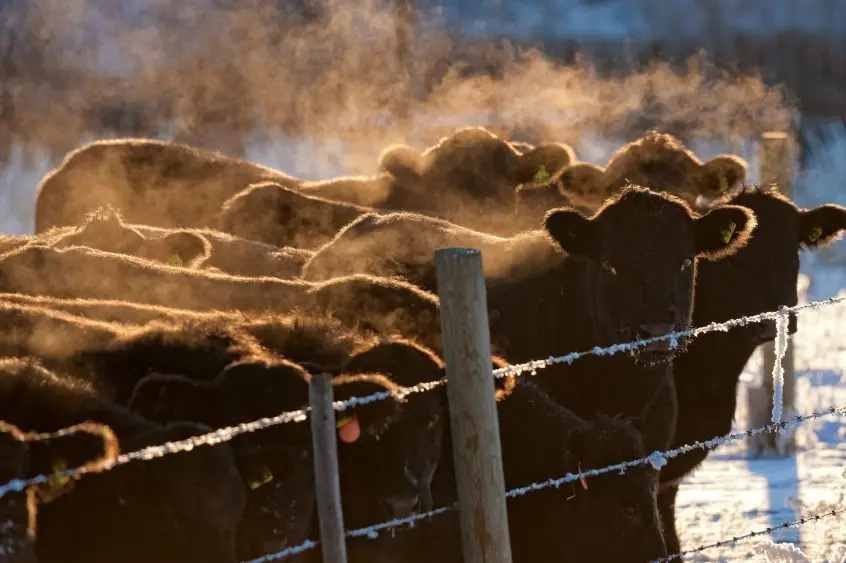
The University of Arkansas System Division of Agriculture’s John Lovett reported that beef prices are expected to remain on an upward trajectory as U.S. beef production continues to decline, with no clear indication that a cattle herd rebuild is underway. At the beginning of the year, U.S. cattle inventories stood at their lowest level since the 1950s, underscoring the depth of the contraction facing the industry. The U.S. cattle sector has remained in liquidation mode since inventories peaked at 94.7 million head in 2019, and since that time the nation’s beef herd has shrunk by roughly 8 million head of cattle, tightening supplies across the market.
“‘Liquidating inventories is one phase of the cattle cycle, a 10- to 12-year pattern of expanding and contracting cattle numbers driven by changes in producer profitability and worsened by drought,’ said James Mitchell, an extension agricultural economist who focuses on livestock for the University of Arkansas System Division of Agriculture and the Dale Bumpers College of Agricultural, Food and Life Sciences,” according to Lovett’s reporting. “‘The impacts of historically tight cattle numbers are being felt at every stage of the beef supply chain.’”
Using data from the U.S. Bureau of Labor Statistics, Lovett reported that the Fryar Center found retail beef prices averaged $8.56 per pound through August 2025, up 60 cents per pound from the same period a year earlier. Beef has averaged about four times the per-pound cost of chicken over the past two years, and as domestic protein demand remains relatively strong, poultry is positioned to gain additional market share against both beef and pork, according to the report.
“‘Understandably, these higher prices have renewed concerns about consumer demand,’ Mitchell said,” Lovett reported. “‘There is some evidence that beef has lost price competitiveness in 2025.’”
Brazil Cattle Supply Set to Begin Shrinking
Reporting for Bloomberg, Dayanne Sousa wrote that inexpensive beef could soon become even harder to find as Brazil, one of the world’s last major sources of abundant cattle, moves into a period of tightening supplies that could lift global prices. Over the past two years, a surge in Brazil’s beef production fueled a sharp rise in exports, driven by large herds that pushed cattle prices lower than in many competing regions and encouraged ranchers to send more animals to slaughter.
At the same time, countries such as the United States, dealing with elevated food costs, sought out cheaper beef supplies from abroad. That dynamic is now shifting. Sousa reported that rising calf prices in Brazil are signaling the beginning of a new cycle in which ranchers hold back female cattle to rebuild herds. This process, known as heifer retention, reduces the number of animals available for slaughter and marks the onset of a tightening supply phase that could last several years.
“‘We are coming out of the phase of excess, and the phase of scarcity hasn’t even begun,’ said César de Castro Alves, manager of agronomic consultancy at Itau BBA bank,” Sousa reported. “Scarcity, he added, is likely to last a few years.” The shift represents a significant reversal for global beef markets and adds pressure for consumers as worldwide protein demand remains elevated.
More U.S. Beef Plants Could Close
Also reporting for Bloomberg, Ilena Peng noted that American beef plants are increasingly vulnerable as the number of cattle available for processing remains well below historical norms, reflecting the smallest U.S. herd in more than half a century. The strain on the supply chain is already leading to difficult decisions for meatpackers.
Peng reported that Tyson Foods Inc., the nation’s largest meatpacker, highlighted those challenges last month when it announced the closure of a Nebraska beef plant and a shift to single-shift operations at a facility in Texas located roughly 450 miles from the Mexican border. According to industry experts, at least one additional large plant and several regional facilities could close within the next 18 months as supply pressures persist. The impacts may be especially pronounced in the South, where plants often rely on cattle imports from Mexico, but the squeeze is being felt nationwide. As one industry veteran noted, “I don’t think that anybody is exempt from it right now.”