


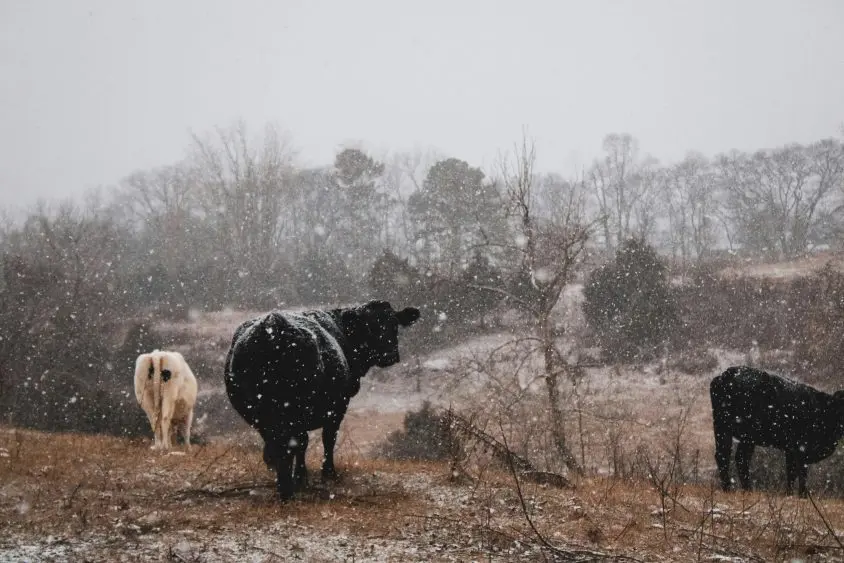
MANHATTAN, Kan. — Cattle producers in the Midwest are urged to be prepared and use common sense as a major winter storm is expected to bring subzero temperatures, strong winds and up to a foot of snow across parts of the state this weekend.
Justin Waggoner, a beef cattle specialist with K-State Extension, said the combination of cold, wind and snow can significantly increase stress on cattle, particularly if producers are not proactive.
“Right now, we’ve got a big winter storm that’s bearing down on a good chunk of the state,” Waggoner said. “We expect some subzero temperatures for an extended period of time here — two to three days.”
How cattle respond to cold stress depends largely on their environment. Waggoner said there are key differences between cattle in confined settings, such as feedlots, and those in more extensive environments like pastures or corn stalks.
“When we get a winter weather event, that common behavioral response is for cattle to huddle up,” he said. “Where we start to see differences is really how they react in terms of intake patterns.”
In feedlot environments, cattle often increase their feed intake ahead of an approaching storm. While that response can help them prepare for colder conditions, it can also create challenges.
“It’s not uncommon to see cattle become a little more aggressive at the bunk and increase intake,” Waggoner said. “That can set up scenarios with acidosis or other digestive upsets.”
Once the storm arrives, cattle may reduce trips to the feed bunk, and feed delivery can be delayed. To offset those disruptions in intake and feeding patterns, Waggoner recommends increasing roughage in the diet.
“Some operations will cover with hay, others will feed a storm ration,” he said. “That usually means adding more roughage — maybe 2 to 4% on a dry matter basis — to help cattle avoid digestive issues.”
Those rations are typically fed starting about 12 hours before a storm and continued for up to 36 hours afterward as cattle recover normal eating patterns.
Cattle on pasture face a different set of challenges, especially when snow covers grazing areas.
“As we get snow cover, it becomes more challenging for cattle to graze,” Waggoner said. “That means we have to replace some of that forage intake with supplemental feeding.”
Cold temperatures compound the problem. With weekend lows forecast in the teens, Waggoner said energy requirements for cows can increase by 20-30%.
“One of the ways to address that is higher-quality hay or supplemental feeds,” he said. “High-fiber feedstuffs are preferred.”
Water access is another critical concern that is often overlooked. In feedlots, Waggoner said producers should ensure tanks remain open by increasing overflow or checking electric heaters.
“If we see snowfall, clearing a path to water tanks is important,” he said. “That’s true in both confined and extensive environments.”
While cattle can consume snow to meet some water needs, Waggoner cautioned that heavy snowfall can still limit access to water tanks.
Providing bedding is another effective strategy. Producers should roll out enough bedding so all animals have a dry place to lie down, especially in muddy or wet areas.
“Giving cattle a dry place to lay down can really help them weather the impacts of a winter storm,” Waggoner said.
Wind protection can also greatly reduce cold stress. Temporary windbreaks using portable winbreak panels, hay bales or even stock trailers can be effective if placed with prevailing winds in mind.
“If we can block the wind, that can greatly reduce the impact of cold stress,” Waggoner said.
Thin cattle, younger calves and animals with lower body condition are at higher risk, he added. While snow on a dry winter hair coat can provide insulation, wet coats dramatically increase energy needs.
As a rule of thumb, Waggoner said cold stress increases maintenance energy requirements by about 1% for every 10 degrees below a cow’s lower critical temperature, roughly 20 degrees. If hair coats become wet, that increase doubles.
Waggoner also emphasized safety for producers and workers.
“Humans experience cold stress, too,” he said. “Dress in layers, stay hydrated, take breaks and be cautious with portable heaters and heat lamps, which are a common source of barn fires.”
He encouraged producers to use the buddy system and check in regularly when traveling to distant pastures.
“Be strategic,” Waggoner said. “A little preparation can go a long way in keeping both cattle and people safe during winter storm events.”
More information is available at local extension offices in Kansas.