
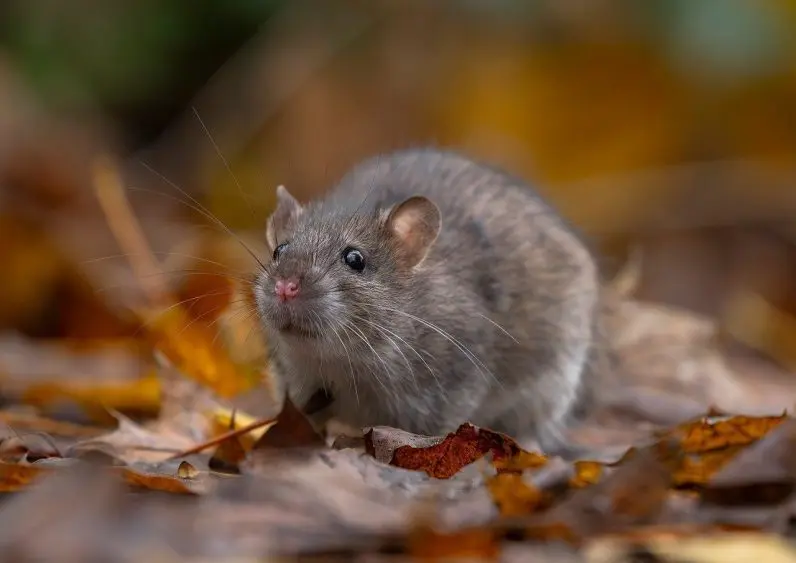
Rodent damage is becoming a costly and increasingly common problem for farmers, rural homeowners, and vehicle owners, particularly as modern equipment relies more heavily on electronics and exposed wiring.
Rodents are not chewing through tractors, cars, or equipment because they are attracted to the materials themselves, according to Ken Heuning, founder of CoverSeal. Instead, vehicles provide shelter from predators, creating an ideal nesting environment.
“They don’t go into cars to eat the car,” Heuning said. “They go into cars to hide. Underneath a vehicle, they’re shielded from hawks, owls, foxes, dogs—anything that hunts from above. Once they’re under there, they find all kinds of places to get away from snakes and other predators.”
Rodents typically gather food elsewhere, store it inside a vehicle or piece of equipment, and return to eat in safety. While nesting, they chew on nearby materials to keep their continuously growing teeth from becoming overgrown. Wiring often becomes collateral damage simply because it is accessible.
“Their teeth are constantly growing, and if they don’t gnaw on things, they literally can’t close their mouths,” Heuning said. “Wiring just happens to be close by.”
Modern wiring insulation, often soy-based, is softer than older plastic insulation and therefore easier for rodents to chew through. Heuning said the shift was driven mostly by European recycling regulations.
“The switch came from a European regulation called WEEE—the Waste Electrical and Electronic Equipment directive,” he said. “It made wiring easier to recycle, but it also made it easier for rodents to chew through.”
The problem has intensified as both vehicles and farm equipment have grown more technologically complex. Modern tractors now rely on engine control units and computer-controlled systems to meet emissions standards and improve fuel efficiency. When rodents damage those systems, repairs often require dealership diagnostics and specialized tools.
“Years ago, if a wire got chewed on a tractor, a farmer could splice it and keep going,” Heuning said. “Now, if a rodent takes out wiring tied to an ECU, the tractor may not even start. During planting or harvest, that’s a serious problem.”
Farm equipment is particularly vulnerable because it is often parked in rodent-heavy environments such as fields, gravel lots, and grassy areas. Unlike cars, tractors and implements lack enclosed underbody panels, leaving electronics more exposed.
“They’re sitting right where rodents live,” Heuning said. “Fields, mowed grass, gravel—that’s their habitat.”
Heuning said his work on rodent prevention began after repeated personal losses. One hybrid vehicle sustained more than $25,000 in rodent-related damage across two incidents. After repairs totaling $18,000, rodents returned within weeks, causing another $7,000 in damage.
“They came back because rodents leave scent trails,” he said. “If they’ve been somewhere safe before, they can find their way back.”
Rather than attempting to repel rodents with scents, sound devices, or chemical deterrents, Heuning said prevention should focus on eliminating access to shelter. According to Heuning, CoverSeal products are designed to seal at ground level using a weighted, flexible tube that conforms to uneven surfaces.
“They’re not determined to get into your car,” he said. “They’re opportunistic. If they can’t get under it quickly, they move on. They don’t want to sit out in the open where they can be spotted.”
The same sealing approach has found applications beyond vehicles. Farmers have begun using the covers to protect feed pallets and hay bales stored in barns, where rodents often access material from below.
“They’ll go up under pallets and chew from the bottom,” Heuning said. “People started using the covers to block that access, especially on dirt floors where the seal conforms to the ground.”
Sun damage is another concern for outdoor equipment. Prolonged exposure can degrade hydraulic hoses, upholstery, and plastic components. Heuning said he recently replaced more than $1,000 in hydraulic lines after sun exposure caused cracking.
“The sun will bake and crack hoses over time,” he said. “Reflecting sunlight helps protect equipment from that kind of damage.”
Breathability was also a design priority. Fully waterproof covers can trap moisture, leading to mold growth on seats, wiring, and interior components.
“Waterproof sounds good until you realize it traps moisture,” Heuning said. “That creates a sweat box. Mold loves that.”
He cautioned that no fabric is truly rodent-proof, despite claims to the contrary.
“There is no rodent-proof fabric,” Heuning said. “Kevlar might come close, but it would be extremely expensive and not practical. The key is blocking access, not trying to make something they can’t chew.”
Rodent populations vary by climate and food availability. Warmer regions see year-round activity, while colder climates experience seasonal slowdowns. Rodents can reproduce multiple times per year, producing several offspring each cycle.
“If there’s food, they multiply,” Heuning said.
While traps and predators can help reduce populations, Heuning said prevention remains the most effective strategy.
“You just don’t want to give them a hiding place,” he said. “A car or a tractor isn’t food—it’s shelter.”