


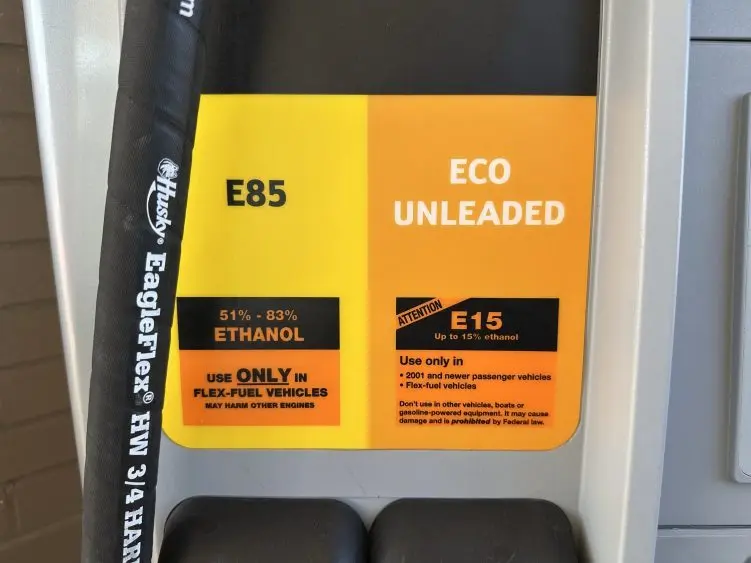
U.S. Secretary of Agriculture Brooke L. Rollins issued a statement praising President Donald J. Trump’s continued support for the nationwide, year-round sale of E-15 ethanol, framing the announcement as a significant policy signal for farmers, biofuel producers, and rural communities as Congress continues to debate how to make the change permanent.
Rollins’ remarks followed the president’s announcement in Iowa, a state at the center of the nation’s corn and ethanol production. Year-round E-15 access has long been a priority for corn growers and ethanol producers, but federal Reid Vapor Pressure rules have historically limited summertime sales in much of the country. While temporary waivers have been issued in recent years, supporters argue that only congressional action can provide long-term certainty for farmers, fuel retailers, and biofuel investors.
The administration’s support comes as lawmakers continue to weigh legislative options that would permanently authorize year-round E-15 nationwide. Backers say the policy would strengthen domestic energy security while expanding demand for American-grown corn and soybeans, particularly at a time when producers are navigating tight margins, volatile markets, and rising input costs.
Rollins emphasized that expanded ethanol access is not only an energy issue but also an economic one for rural America, pointing to the role of biofuels in supporting jobs, stabilizing local grain demand, and improving utilization at ethanol plants across the Midwest. She also highlighted the national security implications of reducing reliance on foreign energy sources by increasing the use of domestically produced biofuels.
“Yet again President Trump is honoring his commitment to America’s farmers and energy producers today in Iowa by announcing his support for the nationwide year-round sale of E-15. As Congress continues to work through the details, the President has been clear – get a bill that allows nationwide E-15 to his desk, and he will sign it to unleash American homegrown row crops for biofuel use like never before. America’s national security depends on our energy security, and biofuels are a crucial asset that brings more jobs and helps farmers in rural America. This action will allow up to 2 billion more bushels of corn to be consumed domestically.
There is no greater advocate for our nation’s corn and soybean growers than President Trump. We are seeing increased biofuel demand both at home and abroad like never before. American corn and soybean growers fuel America and the world, and we will continue to ensure they are able to do that, but at an even faster rate under the Trump Administration. American ethanol exports are up 11% in the last year alone and this is a major opportunity as other countries expand their energy demand for biofuels. The President has negotiated historic, unprecedented trade deals and framework agreements that expanded ethanol access with new purchase agreements including in the UK, Japan, Malaysia, and Cambodia.
The Trump Administration has proven it is the most pro-biofuels administration in our nation’s history, sending a clear market signal there is a growing need for American grown commodities for fuel use. With support for nationwide year-round E-15, the highest Renewable Volume Obligation (RVO) proposal in our nation’s history, and extending the 45Z biofuel tax credit through 2029 in the One Big Beautiful Bill, the Trump Administration is unleashing new domestic and international markers for our farmers and ranchers like never before. We are just getting started.”
Beyond domestic demand, Rollins pointed to growing international opportunities for U.S. ethanol as more countries adopt low-carbon fuel standards and seek to diversify their energy supplies. Expanded market access through recent trade agreements, she said, positions American producers to compete globally at a time when biofuel demand is accelerating worldwide.
Industry groups representing corn growers and ethanol producers have long argued that year-round E-15 would provide greater market certainty and encourage further investment in biofuel infrastructure. At the same time, the issue has drawn opposition in the past from some refining interests, underscoring why supporters view congressional action as essential to settling the debate permanently.
As Congress works through the legislative process, farmers and biofuel markets are expected to closely watch developments tied to E-15 legislation, Renewable Volume Obligation proposals, and implementation of extended biofuel tax credits. Supporters say a permanent policy change could quickly translate into stronger domestic grain demand and improved long-term outlooks for rural economies.