

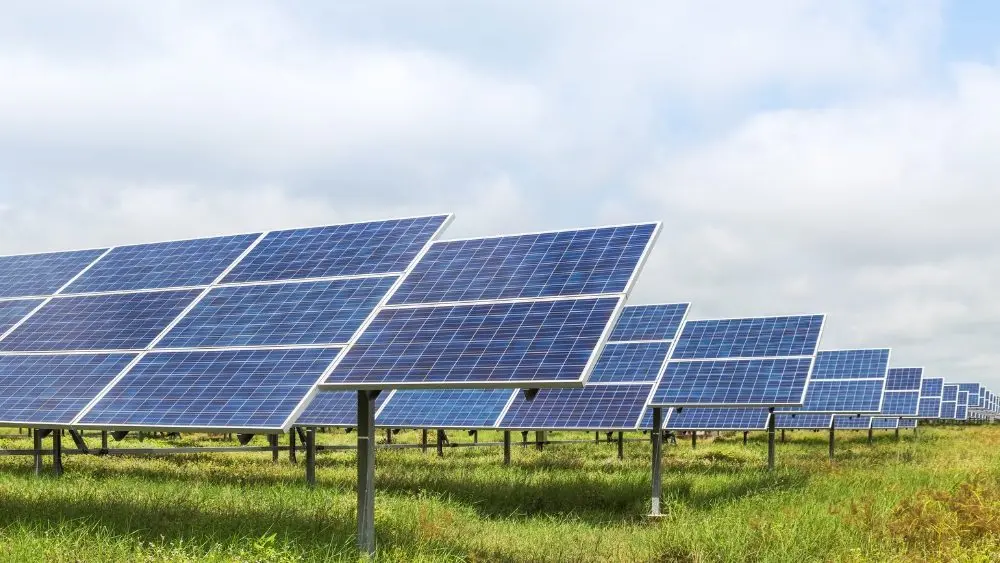
Debate over whether farmers should be able to sell prime farmland for solar projects became a flashpoint during the House farm bill discussion last week.
The issue put two Illinois lawmakers on the House Agriculture Committee on opposite sides: Republican Mike Bost and Democrat Niki Budzinski. Budzinski attempted to remove Bost’s solar provision from the farm bill, arguing it would limit farmers’ decisions about how they use their land.
“I would respectfully say to you, I do think you’re telling farmers what they can and can’t put on their land,” said Budzinksi. “You’re putting restrictions on it.”
Bost pushed back, defending his proposal known as the “Solar Act.” The provision establishes guidelines for farmland that could be used for solar projects funded through USDA programs.
“Over the last decade, we’ve seen time and again, solar panel companies coming to rural areas to purchase or lease prime farmland, offering farmers money, and they can’t refuse, and taking this land out of production,” said Bost.
Supporters of the measure say it is intended to prevent prime farmland from being converted to large-scale solar developments using federal agriculture dollars. Critics, however, argue that solar projects occupy only a small share of farmland and can provide additional income for producers.
Budzinski told lawmakers that even a significant expansion of solar energy would have only a limited effect on the nation’s farmland base.
“Solar accounts for only three percent of agricultural land loss,” said Budzinski. “If the United States dramatically expanded solar generation to supply nearly half of our electricity grid, the Department of Energy estimates that it would require only about point-six percent of existing farmland.”
House Agriculture Committee Chairman GT Thompson also defended the provision, saying the language was designed to balance farmland preservation with on-farm energy development.
“This was carefully crafted to prevent the use of USDA funds to develop utility, utility-scale solar projects on prime farm land using federal dollars, while still allowing producers the flexibility to produce energy on-farm that we want to support.”
Under the proposal, some solar development would still be allowed. Exceptions include solar installations on less than five acres of prime or other farmland, or projects covering less than 50 acres if most of the electricity generated is used on the farm and the project receives local approval.
After debate on the amendment, Budzinski ultimately withdrew her effort to remove the “Solar Act” language from the farm bill.