The University of Missouri Food & Agricultural Policy Research Institute has released the 2026 U.S. Agricultural Market Outlook.
The near-term outlook for farm finances shows stark differences between crop and livestock sectors. Net returns remain poor for most row crops, but the cattle sector, in contrast, is experiencing record prices and returns to cow-calf producers. Policy uncertainty remains especially high, according to FAPRI.
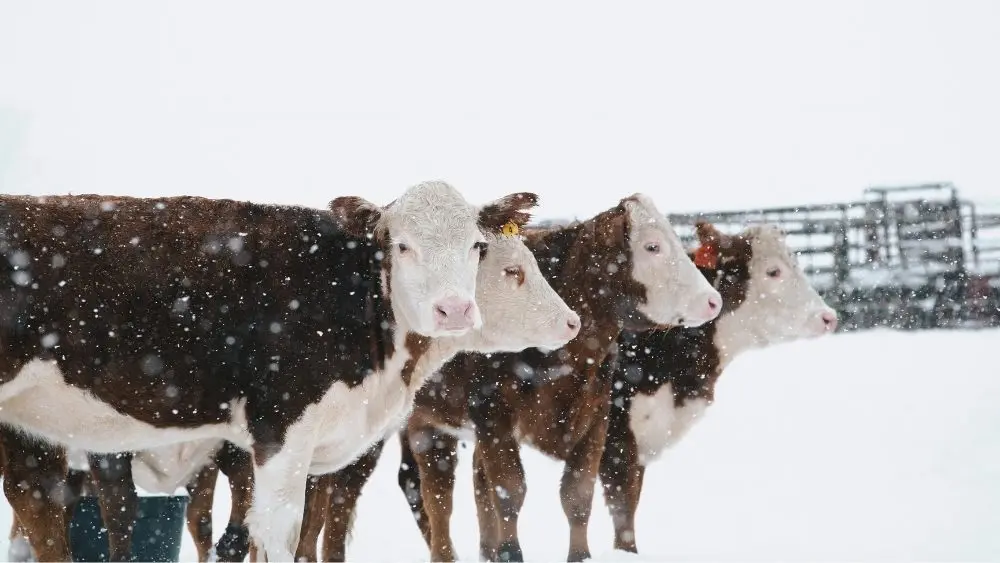
Grain and oilseed prices are expected to rebound modestly in 2026, having fallen from their recent peaks. Corn, soybeans, and wheat prices remain below their average of the last decade. Corn prices are projected to average $4.31 for the 2026 crop, while soybean prices are projected at $10.39 a bushel for 2026-2027. Prices for cotton, rice, sorghum, and many other crops are expected to show modest increases, but margins remain poor. The beef cow herd continued declining, resulting in record cow-calf operator profitability. This profitability eventually causes the cycle to turn, and cattle prices are predicted to start declining in 2027.
This report summarizes baseline projections for agricultural and biofuel markets prepared using information available in January 2026, including macroeconomic forecasts by S&P Global. The baseline reflects current policies, incorporating programs in place in January 2026, but does not reflect any subsequent policy changes. Current geopolitical events in the Middle East, and the related impact on energy and fertilizer prices, add significant near-term uncertainty to the outlook. The baseline is intended to serve as a reasonable point of reference for evaluating alternative scenarios, not a prediction of future market conditions or policy choices.
Some key results:
- Grain and oilseed prices are expected to rebound modestly in 2026 having fallen from their peaks in 2021/22 and 2022/23. Corn, soybeans, and wheat prices remain below their average of the last decade.
- Relative prices and trade uncertainty prompted a significant acreage shift from soybeans to corn in 2025. In the outlook, 2026 corn plantings fall to 94.9 million acres and soybeans plantings rise to 83.3 million.
- Corn prices are projected to average $4.21 for the crop harvested in 2026 with a decline in production offset by lower exports, feed and residual use, and lower, but still plentiful, carryout stocks.
- Soybean prices are projected at $10.39 per bushel for the 2026/27 marketing year. Wheat price rebounds from $4.90 the prior year to $5.58 per bushel in 2026/27.
- Prices for cotton, rice, sorghum, and many other crops, having also declined sharply from recent peaks, show modest increases, but margins also remain poor for these crops.
- The beef cow herd continued to decline through January 2026 and, along with suspended live animal trade with Mexico and robust demand, has resulted in record cow-calf operator profitability. This profitability eventually causes the cycle to turn, and cattle prices start to decline in 2027.
- Lower feed costs have supported livestock profitability. Going forward, the outlook will be sensitive to feed costs, international markets, and animal disease and pest pressures along with domestic demand.
- Fewer incidents of Highly Pathogenic Avian Influenza (HPAI) late into 2025 and early 2026 have supported the rebuild of the egg-laying flock and notably moderated egg prices, which reached record levels in February 2025. The outlook for eggs depends significantly on the prevalence of future disease outbreaks.
- Provisions of the One Big Beautiful Bill Act (OBBBA) increase Commodity Credit Corporation (CCC), Natural Resources Conservation Service (NRCS), and crop insurance government outlays. Section 5 CCC transfers and subsequent expenditures are assumed to continue in the current-policy baseline, with total mandatory outlays in the outlook at similar levels of expenditure since FY 2019.
- Net farm income fell by one-third between 2022 and 2024 as the drop in crop returns outweighed the effects of stronger cattle prices. Supported by a jump in government payments, farm income in 2025 and 2026 is expected to be above the average of the prior decade.
- Consumer food price inflation rose to 2.8% in 2025 with significant contributions from eggs and beef. The outlook is for a 2.5% increase in consumer food prices in 2026.