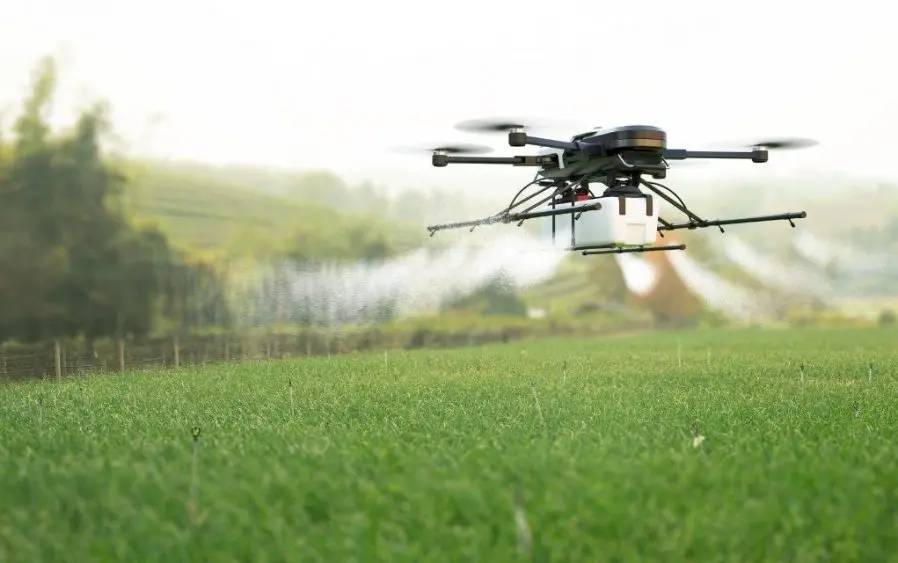
ALEXANDRIA, VA – APRIL 20, 2026 – As the United States agriculture industry enters the upcoming growing season, the National Agricultural Aviation Association (NAAA) asks all uncrewed aircraft system (UAS) operators (or drones) to be mindful of low-altitude crewed (or manned) agricultural aircraft operations. Agricultural aircraft—both manned and unmanned—treat 137 million acres of cropland in the U.S. each year, in addition to millions of acres of pastureland, rangeland and forestry that help farmers increase productivity and protect their crops.
“With the increasing number of uncrewed aircraft operations over the last few years, their operators must be aware of low-flying, manned agricultural aircraft,” said Andrew Moore, chief executive officer of NAAA. “It is extremely difficult, if not impossible, for manned aircraft to see a drone while conducting aerial applications 10 feet off the ground at speeds of up to 140 mph. UAS are not allowed to operate above 400 feet without a waiver from the Federal Aviation Administration (FAA), meaning they share low-altitude airspace with ag aircraft. We encourage professional and hobbyist UAS operators to keep this in mind, equip UAS with detect and avoid technology and give right-of-way to manned or crewed ag aircraft to ensure a safe 2026 growing season.”
In a survey conducted by NAAA near the end of the 2025 agricultural aviation season, 20% of manned aerial application operators reported an unsafe encounter with a drone while operating an ag aircraft last year, compared to 16% in 2024 and 11% in 2023.
NAAA offers educational flyers providing details to spray drone operators and their customers on licensing, regulatory and insurance requirements, in addition to best management practices, to ensure compliance and professionalism in the spray drone industry. The spray drone operator flyer is online at https://www.agaviation.org/UAAS-flyer-operator-pdf, and the spray drone operations’ customer flyer is online at https://www.agaviation.org/UAAS-flyer-customer-pdf. The operator flyer lists the licenses, certificates, registration and insurance requirements that spray drone operators must fulfill in order to comply. The customer flyer outlines those same requirements and practices to best ensure they are contracting with a professional spray drone service and address their liability.
NAAA urges drone operators to do everything possible to avoid manned ag aircraft conducting important low-altitude work, including the following recommendations:
- Give the right of way to a manned aircraft. It’s the law.
- Equip drones with visible strobe lights, highly visible markings and tracking technology, such as an ADS-B In system.
- Monitor aviation radio frequency 122.925 MHz for crewed agricultural aircraft. To transmit on this frequency, consider a radio station license by submitting FCC Form 605.
- Be certified and well-trained in operating an uncrewed aircraft.
- Contact local agricultural aviation operations before flying by consulting the Find An Aerial Applicator database at AgAviation.org.
- Land your uncrewed aircraft immediately when a low-flying aircraft is nearby.
- Carry uncrewed aircraft liability insurance.
To help avoid collisions between manned ag aircraft and UAS, NAAA has recommended that manned ag aviators circle the application site before entering it to ensure UAS operators have time to spot the manned aircraft and land their UAS. The FAA also reminds UAS users to keep safety in mind during their annual Drone Safety Day on Saturday, April 25.
Research has proven that small UAS can be virtually invisible—and potentially lethal—to agricultural aviators, air ambulance helicopters, law enforcement and other low-flying manned aircraft operating in the same airspace.
In addition, when birds hit an ag aircraft, they can break through its windshield, causing deadly accidents. A study conducted by the Alliance for System Safety of UAS through Research Excellence (ASSURE) showed UAS collisions with aircraft cause more damage than a bird strike of comparable size would, due partially to the uncrewed aircraft’s dense motors and batteries, as opposed to a bird made mostly of water, feathers, hollow bones and sinew.
The public depends on the continued safe, affordable and abundant supply of food, fiber and bioenergy, and America’s agricultural aviators are busy working in the skies to help farmers produce their crops. Ag aircraft also fly at low altitudes to combat wildfires and make applications to eradicate mosquitoes and other deadly pests. If you’re going to fly a UAS, please be responsible and do everything possible to avoid crewed/manned agricultural aircraft. Learn more at AgAviation.org/uavsafetycampaign and Knowbeforeyoufly.org.